
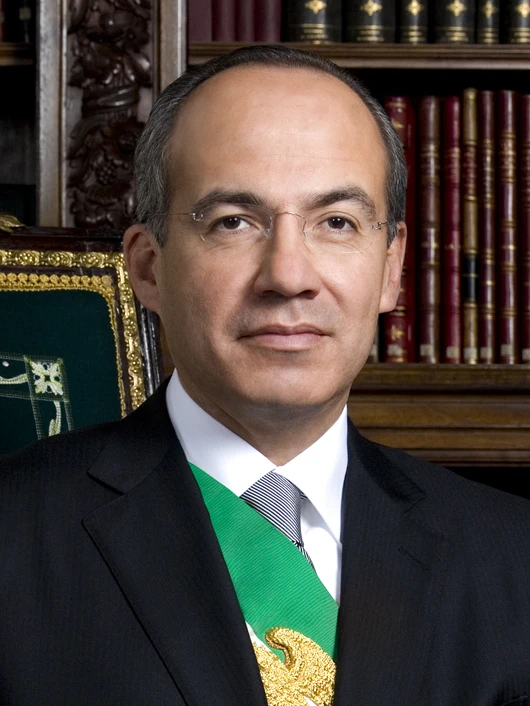
Felipe Calderón stands as a pivotal figure in modern Mexican history, serving as the 63rd president of Mexico from 2006 to 2012 and previously holding the role of Secretary of Energy. This Felipe Calderón biography highlights the career of a lawyer and politician who navigated the complex transition from decades of PRI dominance to a new era of political competition. Born in Morelia, Michoacán, Calderón’s legacy is defined by his controversial security strategies, significant climate policy initiatives, and a post-presidential focus on global sustainability.
Demographic Data and Core Attributes of Felipe Calderón
Felipe Calderón was born on August 18, 1962, in Morelia, Michoacán, Mexico, where Felipe Calderón developed an early interest in political activism. Felipe Calderón is 64 years old and operates within the professional domains of law, public administration, and international policy. Felipe Calderón holds a net worth of $5 million, a figure that reflects both Felipe Calderón’s presidential salary history and post-presidential income from board positions and speaking engagements.
Felipe Calderón’s educational background is rigorous and international, combining legal training in Mexico with advanced degrees in economics and public administration. Felipe Calderón studied law at the Escuela Libre de Derecho in Mexico City, establishing a foundation in legal practice. Felipe Calderón later earned a master’s degree in economics from the Instituto Tecnológico Autónomo de México, better known as ITAM.
Felipe Calderón completed a master’s degree in public administration from Harvard University’s John F. Kennedy School of Government, graduating from the Mid-Career Master in Public Administration program in 2000.
These academic credentials positioned Felipe Calderón as a technocratic leader within the National Action Party, distinguishing Felipe Calderón from many peers who lacked formal training in economics or international relations. Felipe Calderón’s birth sign is Leo, though Felipe Calderón’s professional identity is primarily anchored in political leadership and legal expertise. Felipe Calderón’s demographic profile places Felipe Calderón within a generation of Mexican leaders who sought to modernize the country’s governance structures during the early 21st century.
Professional Career and Celebrity History of Felipe Calderón
Felipe Calderón’s political career began in the early 1980s when Felipe Calderón formally joined the National Action Party (PAN) in 1980. Felipe Calderón became the first leader of the PAN’s reorganized national youth organization during the late 1980s, marking the start of Felipe Calderón’s ascent through the party’s hierarchy. In 1988, at age 25, Felipe Calderón won a seat in the Assembly of Representatives of the Federal District, an early predecessor of Mexico City’s present-day legislature.
Felipe Calderón was elected to Mexico’s Chamber of Deputies in 1991 and became secretary-general of the PAN’s national executive committee in 1993.
Felipe Calderón ran unsuccessfully for governor of Michoacán in 1995 but was subsequently elected national president of the PAN in 1996 at the age of 33. Felipe Calderón led the party for three years and returned to the Chamber of Deputies following the 2000 election, which brought Vicente Fox to the presidency and ended more than seven decades of uninterrupted presidential rule by the PRI. In February 2003, Fox appointed Felipe Calderón director of Banobras, Mexico’s state-owned development bank for infrastructure and public services.
Seven months later, Felipe Calderón became secretary of energy, a role Felipe Calderón held until resigning in May 2004 amid tensions with Fox over Felipe Calderón’s prospective presidential candidacy.
2006 Presidential Election and Presidency
Felipe Calderón defeated Andrés Manuel López Obrador in the July 2006 presidential election, with Felipe Calderón receiving 14,916,927 votes compared to López Obrador’s 14,683,096 votes. The margin of victory was 233,831 votes, making this one of the closest contests in Mexican history. Felipe Calderón took office on December 1, 2006, amid significant political protests and polarization surrounding the election result.
Felipe Calderón’s presidency was defined by the deployment of the military and federal security forces against Mexico’s powerful drug cartels.
This strategy led to a fragmentation of drug-trafficking organizations and the capture or killing of senior cartel figures. However, the campaign also resulted in sharply increasing violence among criminal groups and between cartels and the government. Human Rights Watch reported in 2011 that security-force participation was strongly suggested in more than 170 cases of torture, 39 disappearances, and 24 extrajudicial killings since Felipe Calderón took office.
Felipe Calderón’s administration also governed through the global financial crisis, during which Mexican economic output contracted by approximately 6.5% in 2009 according to the International Monetary Fund.
Felipe Calderón’s government responded with fiscal stimulus, interest-rate reductions, and financial-market support, allowing economic growth to resume later in 2009. Felipe Calderón’s administration expanded the Seguro Popular public-health system and introduced a program providing health insurance to children born after the beginning of Felipe Calderón’s term. In 2010, Mexico hosted the United Nations’ COP16 climate conference in Cancún, producing the Cancún Agreements and establishing the framework for the Green Climate Fund.
Felipe Calderón signed Mexico’s General Climate Change Law in June 2012, establishing a national legal framework for climate-change mitigation and adaptation. Felipe Calderón completed Felipe Calderón’s six-year term in 2012 and was succeeded by Enrique Peña Nieto of the PRI.
Post-Presidential Career and Business Activities
After leaving office, Felipe Calderón became the inaugural Angelopoulos Global Public Leaders Fellow at Harvard Kennedy School. Felipe Calderón devoted substantial effort to climate change, sustainable economic development, and international policy. Felipe Calderón became a member of the board of the World Resources Institute and chaired the Global Commission on the Economy and Climate.
Felipe Calderón serves as president of the Sustainable Human Development Foundation. Felipe Calderón is also listed as president of the Environment and Sustainability Commission by the FIA, the international governing body for automobile racing.
Felipe Calderón joined the board of U.S. energy company Avangrid in July 2016. Securities and Exchange Commission filings show that Felipe Calderón received $200,000 in director compensation in 2017 and another $200,000 in 2018. Felipe Calderón resigned from the Avangrid board effective December 31, 2018.
Felipe Calderón has acknowledged that paid speaking became one of Felipe Calderón’s sources of income after leaving public office. Felipe Calderón authored the book “Los retos que enfrentamos” in 2014 and the memoir “Decisiones difíciles” in 2020.
Felipe Calderón left the PAN in 2018 following disagreements with the party’s leadership. Felipe Calderón and wife Margarita Zavala supported the creation of México Libre, a political organization that sought recognition as a national political party. Mexican election authorities denied the organization party registration in 2020.
Felipe Calderón announced in 2017 that Felipe Calderón would donate presidential pension payments to a children’s cancer organization, a decision made before Mexico eliminated the special pension system for former presidents.
Family, Brand, and Organization Connections of Felipe Calderón
Felipe Calderón’s personal and professional life is deeply intertwined with his family, particularly his wife, who is a prominent political figure in Mexico. Felipe Calderón married lawyer and politician Margarita Zavala in 1993, meeting the two through their involvement in the PAN. Felipe Calderón and Margarita Zavala have three children: María, Luis Felipe, and Juan Pablo.
Margarita Zavala served in Mexico’s Chamber of Deputies and pursued a national political career, seeking the presidency as an independent candidate in 2018 before withdrawing from the race.
Felipe Calderón’s connection to the National Action Party spanned nearly four decades, from Felipe Calderón’s formal joining in 1980 until Felipe Calderón’s departure in November 2018. Felipe Calderón’s father, Luis Calderón Vega, was a writer, political activist, and one of the founders of the PAN, which had been established in 1939. Felipe Calderón’s early political participation was influenced by this familial legacy, with Felipe Calderón beginning PAN activities while still young.
Felipe Calderón’s post-presidential affiliations include the World Resources Institute, the Global Commission on the Economy and Climate, and the Sustainable Human Development Foundation. Felipe Calderón also held a board position at Avangrid, a U.S. energy company. Felipe Calderón’s academic connection to Harvard University is marked by Felipe Calderón’s status as a 2000 graduate of the John F. Kennedy School of Government and Felipe Calderón’s role as an inaugural Angelopoulos Global Public Leaders Fellow.
Awards, Rankings, and Achievements of Felipe Calderón
Felipe Calderón has received numerous international honors recognizing Felipe Calderón’s contributions to global affairs, sustainability, and diplomatic relations. These awards reflect Felipe Calderón’s engagement with international bodies and Felipe Calderón’s role in advancing climate and economic policy.
- Honorary Knight Grand Cross of the Order of the Bath: Received in recognition of Felipe Calderón’s service and diplomatic engagements.
- Collar of the Order of Isabella the Catholic: An honor reflecting Felipe Calderón’s contributions to cultural and political relations.
- Champions of the Earth: An award recognizing Felipe Calderón’s leadership in environmental sustainability.
- Grand Collar of the Order of the Southern Cross: A distinction highlighting Felipe Calderón’s impact on international cooperation.
- Knight of the Order of the Elephant: A high honor reflecting Felipe Calderón’s diplomatic stature.
- Order of Merit: An award acknowledging Felipe Calderón’s contributions to public service.
- Order of José Matías Delgado: A recognition of Felipe Calderón’s efforts in regional development.
- Order of the Quetzal: An honor reflecting Felipe Calderón’s diplomatic and cultural contributions.
- Order of Belize: A distinction recognizing Felipe Calderón’s international engagements.
- Golden Key of Madrid: An award symbolizing Felipe Calderón’s connection to Spanish-speaking communities.
Frequently Asked Questions About Felipe Calderón
How old is Felipe Calderón?
Felipe Calderón is 64 years old. Felipe Calderón was born on August 18, 1962, in Morelia, Michoacán, Mexico. Felipe Calderón’s age reflects a long career in Mexican politics and international policy.
What is Felipe Calderón’s net worth?
Felipe Calderón has a net worth of $5 million. This figure includes Felipe Calderón’s presidential salary, board compensation from Avangrid, and income from speaking engagements. Felipe Calderón’s financial disclosures show combined assets of more than 17.1 million pesos in 2013.
Where did Felipe Calderón study law?
Felipe Calderón studied law at the Escuela Libre de Derecho in Mexico City. Felipe Calderón later earned economics and public administration degrees from ITAM and Harvard. Felipe Calderón’s education provided the technical foundation for Felipe Calderón’s political career.
Who defeated Felipe Calderón in the 2018 election?
Felipe Calderón did not run in the 2018 election. Felipe Calderón left the PAN in 2018 and supported the creation of México Libre. Felipe Calderón’s political focus shifted to international sustainability organizations after leaving the presidency.
What happened to Genaro García Luna?
Genaro García Luna, Felipe Calderón’s security secretary, was convicted in a U.S. federal court in 2023. García Luna was sentenced to 460 months in prison for drug trafficking conspiracies. Felipe Calderón stated Felipe Calderón never received verifiable evidence of García Luna’s criminal activity during Felipe Calderón’s presidency.